Luis Enrique builds PSG on the legacy of Cruyff and Van Gaal: tonight a chance at a second consecutive Champions League title
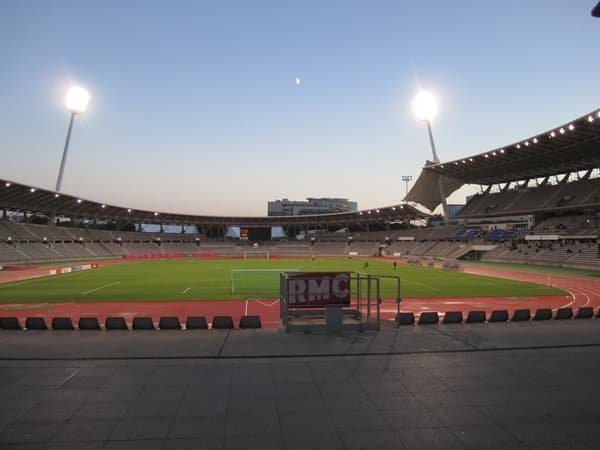
Paris Saint-Germain face a second consecutive Champions League final tonight, this time against Arsenal. Under manager Luis Enrique, the Parisian club has transformed from a collection of stars into a tight-knit collective, rooted in the total football philosophy of Johan Cruyff and the tactical discipline of Louis van Gaal.
From star parade to football philosophy
Paris Saint-Germain are currently the most complete team in Europe. The credit typically goes to manager Luis Enrique, but the roots of their present success run far deeper. The tactical foundation in the French capital is built on a legacy that begins with Johan Cruyff. Analyst Thierry Henry captured this perfectly after the semi-final against Bayern München, drawing a line from Rinus Michels to Cruyff, then on to Louis van Gaal and Pep Guardiola. Michels introduced total football, Cruyff turned possession and space creation into an art form, Van Gaal added tactical discipline, and Guardiola perfected positional play. Enrique is now taking the next step in that chain.
Enrique combines Dutch and Catalan principles
The Spanish coach blends classical Dutch and Catalan football principles with an intensive pressing game. Lee-Roy Echteld, a former PSG youth coach and current manager of AZ, recognises the kinship with earlier work: "Enrique has the same ideas that Pep Guardiola once had at FC Barcelona. He wants to keep the ball constantly, play spectacular football and is willing to take risks to do so." Of all the coaches who shaped him, Enrique himself names Van Gaal as the manager from whom he learned the most about the game. The two clashed regularly when Enrique played as a midfielder under Van Gaal at Barcelona, but it was precisely those confrontations that proved invaluable.
Tactical detail as a weapon: the semi-final against Bayern
The spectacular showdown between PSG and Bayern München, which ended 5-4, was a masterclass in tactical refinement at the highest level. One striking detail: goalkeeper Matvej Safonov deliberately kicked his goal kicks out of play on the opposition's half. The aim was to neutralise Bayern attacker Michael Olise. By repeatedly giving Bayern a throw-in on their own half, PSG could defend in a compact and organised shape on that side. Olise, ordinarily one of the most dangerous players in his team, managed just two tame shots across the entire match. PSG applied the same principle to kick-offs, playing them directly towards the corner flag to pin the opposition positionally and seize the initiative.
Proof arrived last year: 5-0 in the final against Inter
Enrique's tactical blueprint already proved its worth last year. In the Champions League final against Internazionale, PSG completely neutralised their opponents with a relentless high press. The final score was 5-0, the biggest winning margin in Champions League final history. Tonight, against Arsenal, the side will look to repeat that performance and claim the European crown for a second successive season.
Collective above individual: a cultural shift in Paris
The transformation at PSG is not only tactical but also cultural. During the eras of Zlatan Ibrahimovic, David Beckham, Neymar, Lionel Messi and Kylian Mbappé, the club was renowned for individual brilliance that rarely translated into European dominance. Echteld, who witnessed that period first-hand, describes how the club revolved entirely around its stars: "Sometimes someone would break through, play ten or fifteen matches, and then ultimately be sold because another big name had arrived." Mbappé himself admitted at the time that he struggled with Enrique's collective work ethic. The current squad sees things differently. Forward Chvitsja Kvaratschelia sums up the new mentality: "We have many players who can make the difference. Sometimes it's you who makes the difference, sometimes another player, and sometimes we change the game as a team." That shift is also visible in the physical data: the squad covers an average of around ten kilometres more per match than during the era of the big stars — a single figure that encapsulates the heightened intensity and work rate of the current PSG.
Related
Source: Via NOS (GNews)
Comments
- Be the first to comment.